
Operational Visibility Metrics: What High-Performing DevOps Teams Track
Learn how OpsBrief helps engineering and operations teams track meaningful operational visibility metrics, reduce detection latency, and gain real-time insight into critical system activity.

Rosemary Samuel

It’s 8:47am. Your dashboards are green. Infrastructure looks stable.
But support tickets are rising, users are complaining, and engineering is scrambling to figure out what changed.
The problem isn’t lack of monitoring. It’s lack of visibility into what’s actually happening across your systems. And most teams are tracking the wrong metrics.
The Problem with Traditional Operational Metrics
Most DevOps and SRE teams focus heavily on:
- MTTR (Mean Time to Resolution)
- Uptime
- Incident count
- SLA/SLO compliance
These metrics matter.
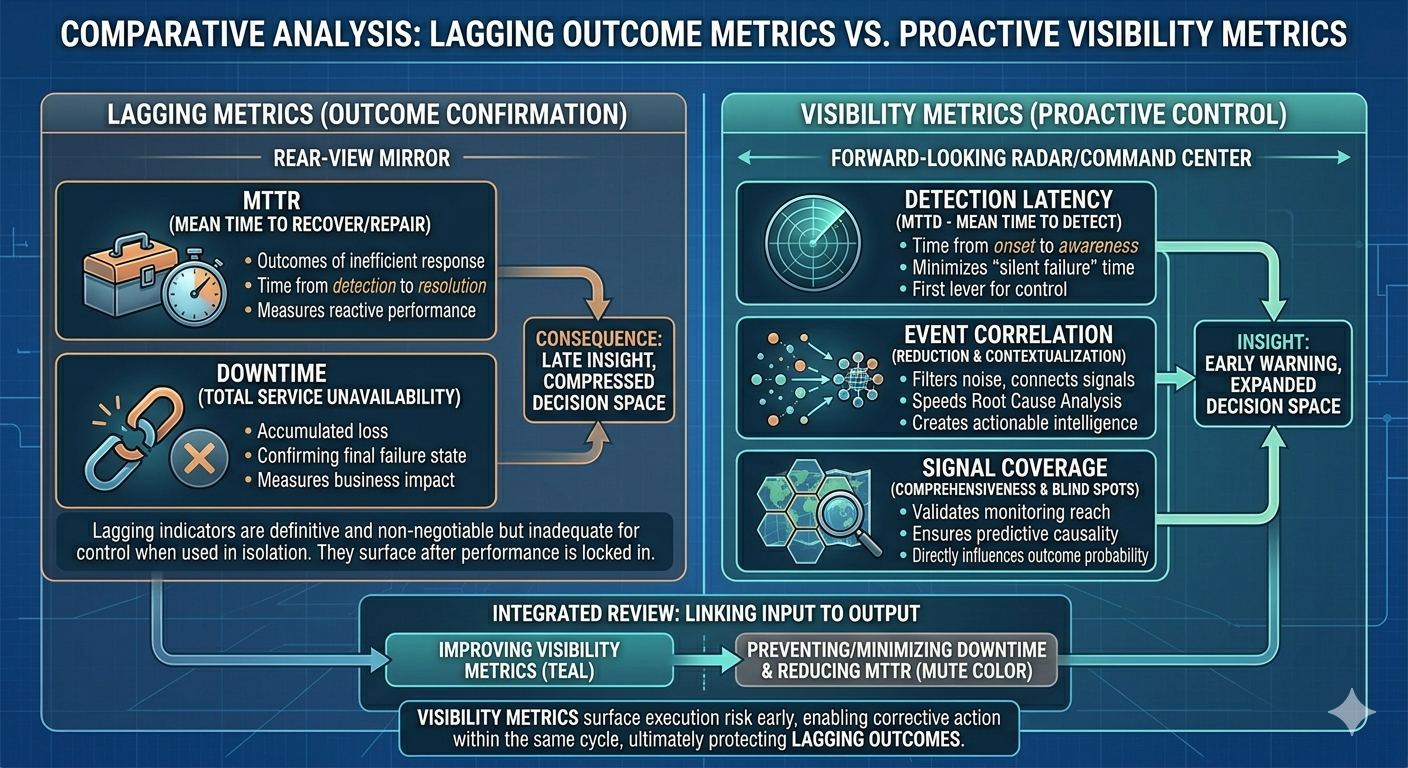
But they’re mostly lagging indicators. They tell you what happened after the damage is done.
What they don’t tell you is:
- How quickly teams detected the issue
- Whether critical signals were missed
- If deployments correlated with incidents
- How operational context evolved in real time
That’s where operational visibility metrics come in.
What Are Operational Visibility Metrics?
Operational visibility metrics measure how effectively teams can:
- Detect changes
- Understand system behavior
- Correlate events
- Identify incidents early
- Respond with context
They focus less on infrastructure health alone and more on operational awareness. High-performing teams treat visibility itself as a measurable capability.
The Metrics High-Performing Teams Actually Track
1. Detection Latency
This measures how long it takes to detect an issue after it begins.
A team with a 10-minute detection latency will outperform a team with excellent MTTR but 60-minute detection delays. Top teams aggressively optimize this metric because earlier awareness reduces overall incident impact.
2. Event Correlation Rate
How often can teams connect incidents to recent operational changes?
Examples:
- Deployments
- Config updates
- Feature flag changes
- Infrastructure modifications
Teams with strong event correlation identify root causes significantly faster.
3. Alert-to-Incident Ratio
Not every alert becomes an incident. A high alert volume with low incident relevance usually signals alert fatigue and poor prioritization. Healthy teams reduce noise and increase signal quality.
4. Cross-Team Visibility Coverage
Can engineering, product, and operations see the same operational context?
Visibility gaps between teams slow down incident response and create confusion during outages.
5. Change Awareness Time
How quickly can teams identify what changed before an incident?
This metric becomes critical during deployments and high-frequency release cycles. The faster teams answer "What changed?" The faster they resolve incidents.
Why These Metrics Matter More Than Ever
Modern systems are increasingly distributed. Signals now live across:
- GitHub
- Slack
- Monitoring platforms
- Incident tools
- CI/CD pipelines
Without operational visibility metrics, teams operate reactively. They respond to alerts without understanding the broader operational story.
That leads to:
- Longer root cause analysis
- Increased incident cost
- Missed warning signals
- Operational burnout
Where OpsBrief Fits In
This is exactly the challenge OpsBrief is designed to solve. OpsBrief helps teams move beyond fragmented monitoring by:
- Capturing operational events across tools
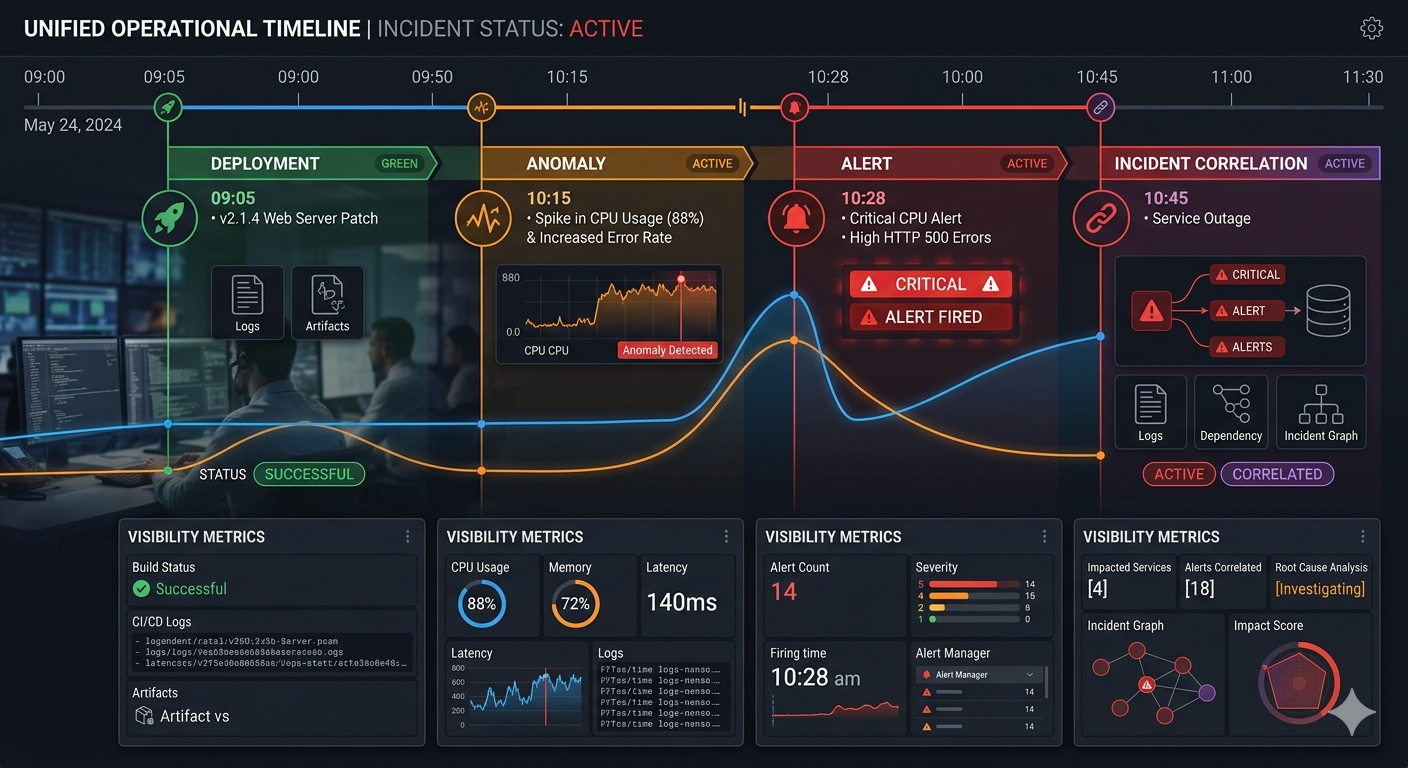
- Correlating deployments, alerts, and incidents
- Classifying events by severity using AI
- Building a unified operational timeline
- Surfacing meaningful visibility metrics in real time
Conclusion
Monitoring tells teams when systems fail.
Operational visibility explains:
- what changed?
- why it matters,
- and how issues evolve over time.
The highest-performing teams don’t just monitor infrastructure. They measure visibility itself. Because the faster teams understand operational context, the faster they can prevent problems from becoming incidents.
Gain Operational Visibility. Request a demo.
#IncidentManagement #PlatformEngineering #OperationalVisibility


