
Operational Silos Are Slowing Down Your Entire Company
Learn how OpsBrief helps teams eliminate operational silos by connecting incidents, deployments, alerts, and operational activity into one searchable timeline.

Alexander Eric

Most companies don't suffer from a lack of information. They suffer from information being trapped in different places. Engineering teams have one view of operations. Product teams have another. Operations teams rely on separate tools. Business stakeholders often depend on secondhand updates. As organizations grow, these operational silos become increasingly difficult to manage. The result isn't just communication challenges. It affects decision-making, incident response, productivity, and overall business performance.
What Are Operational Silos?
Operational silos occur when important information is isolated within specific teams, tools, or workflows. This often happens naturally as organizations adopt specialized systems for different functions. For example:
- Engineering teams monitor infrastructure through observability platforms
- Deployments are tracked in source control systems
- Incidents are managed through alerting and escalation tools
- Internal communication takes place in chat platforms
- Business teams rely on reporting dashboards.
Why Silos Create Operational Delays
When information is fragmented, teams spend valuable time gathering context before they can make decisions. A service issue may trigger alerts for engineering teams, but product teams may not immediately understand customer impact. A deployment may cause unexpected behavior, but responders may not realize the connection until much later. This creates delays in:
- Incident investigation
- Escalation processes
- Root cause analysis
- Cross-team communication
- Operational decision-making
The issue isn't a lack of data. It's a lack of visibility across that data.
Operational Visibility Improves Coordination
Organizations perform better when teams operate from a shared understanding of events. When deployments, incidents, alerts, and infrastructure changes can be viewed together, teams spend less time searching for information and more time solving problems. Shared operational visibility helps teams:
- Understand how events are connected
- Identify issues faster
- Improve coordination during incidents
- Reduce communication gaps
- Align technical and business stakeholders
This creates a more efficient operational environment across the organization.

The Cost Extends Beyond Engineering
Operational silos are often viewed as an engineering problem, but their impact extends much further. Support teams may struggle to answer customer questions during outages. Product teams may lack visibility into release-related issues. Operations leaders may have difficulty identifying recurring bottlenecks. Business stakeholders may receive delayed or incomplete information about operational disruptions. When visibility is fragmented, every department experiences the consequences.
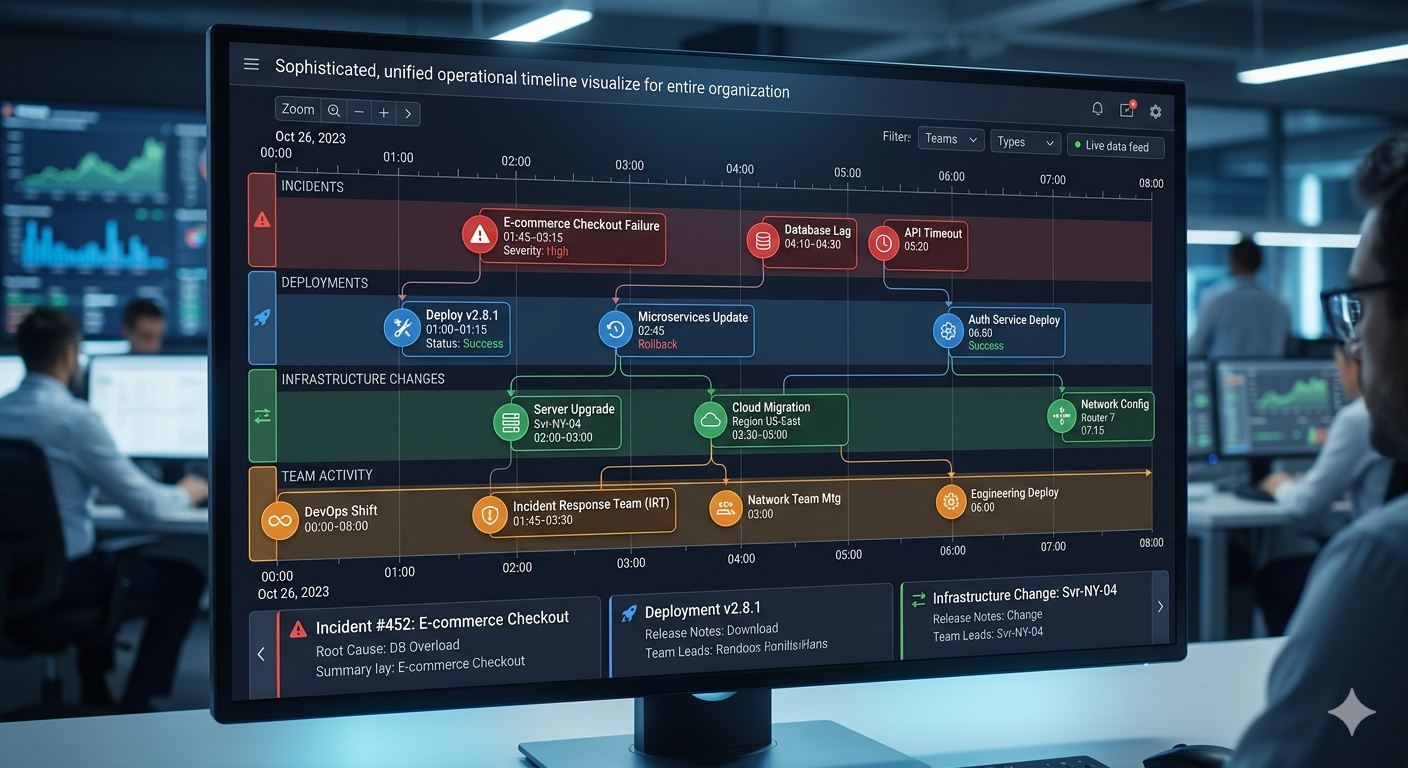
Building a Shared Operational Timeline
One of the most effective ways to reduce operational silos is to create a centralized view of operational activity. A shared timeline helps teams understand:
- What changed
- When it changed
- Which systems were affected
- Who responded
- How events are connected
This creates operational awareness that extends beyond individual tools or departments.
Turning Operational Data Into Operational Intelligence
OpsBrief helps organizations bring operational activity from tools like Slack, GitHub, PagerDuty, Datadog, Discord, and Microsoft Teams into a single searchable operational timeline. Instead of piecing together information from disconnected systems, teams gain visibility into how operational events relate to one another across the business. This improves coordination, reduces investigation time, and helps teams make better decisions with less effort.
Conclusion
Operational silos don't just slow down individual teams. They slow down entire organizations.
As businesses become more interconnected, operational visibility becomes essential for effective collaboration, faster incident response, and stronger decision-making.
Teams that can connect operational events across departments gain a significant advantage in both efficiency and resilience.
Break down Operational Silos. Gain Visibility. Request for a demo


