
Root Cause Analysis Is Broken: Why Teams Struggle to Find What Actually Failed
Most postmortems identify symptoms, not causes. This post explains why traditional root cause analysis fails in modern systems (especially microservices) and introduces a faster, data-driven approach using dependency mapping and event timelines to find root causes in minutes instead of hours.

Jasmine Decker

It’s 3:42pm. An incident is ongoing. Your team is scrambling. Logs are open. Dashboards everywhere. Slack threads exploding. Everyone is asking the same question: “What actually failed?”
Thirty minutes in, no clear answer. An hour later, you find the issue. A small deployment change.
Again.
The Problem: RCA Starts Too Late
Root Cause Analysis (RCA) is supposed to answer one thing: “Why did this happen?”
But in most teams, RCA is:
- Slow
- Manual
- Incomplete
And worst of all, it happens after the damage is done.
Why RCA Breaks Down
1. Fragmented data
Logs, alerts, deployments, and incidents live in different tools.
2. No real-time context
Teams lack visibility into what changed leading up to the incident.
3. Alert-first thinking
Teams react to alerts instead of understanding underlying causes.
4. Memory-based debugging
Engineers rely on guesswork and experience under pressure.
The result:
- Long investigation times
- Repeated incidents
- High cognitive load
The Real Issue: Missing Operational Context
RCA fails because teams don’t have a clear timeline of events. They see:
- Alerts
- Errors
- Metrics
But not the sequence of changes that led to failure. Without context, every investigation starts from scratch.
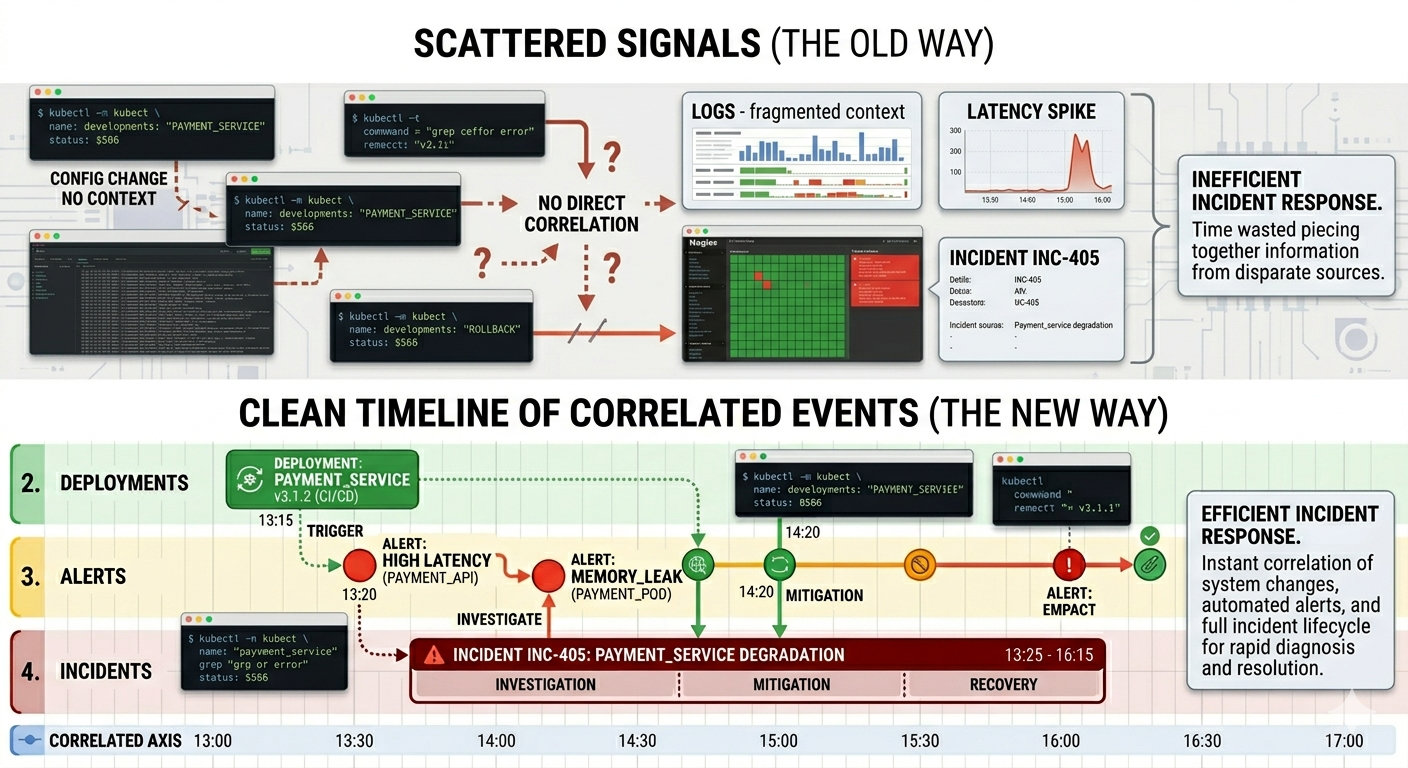
A Better Approach: Continuous Root Cause Visibility
High-performing teams don’t wait for RCA. They build systems that make the root cause obvious in real time. Here’s how:
1. Track Changes as First-Class Data
Deployments, config updates, and releases must be visible.
2. Build a Real-Time Timeline
Every event should be logged and time-stamped.
3. Correlate Signals Automatically
Connect deployments with anomalies and incidents.
4. Prioritize Context Over Volume
Focus on meaningful changes, not raw alerts.
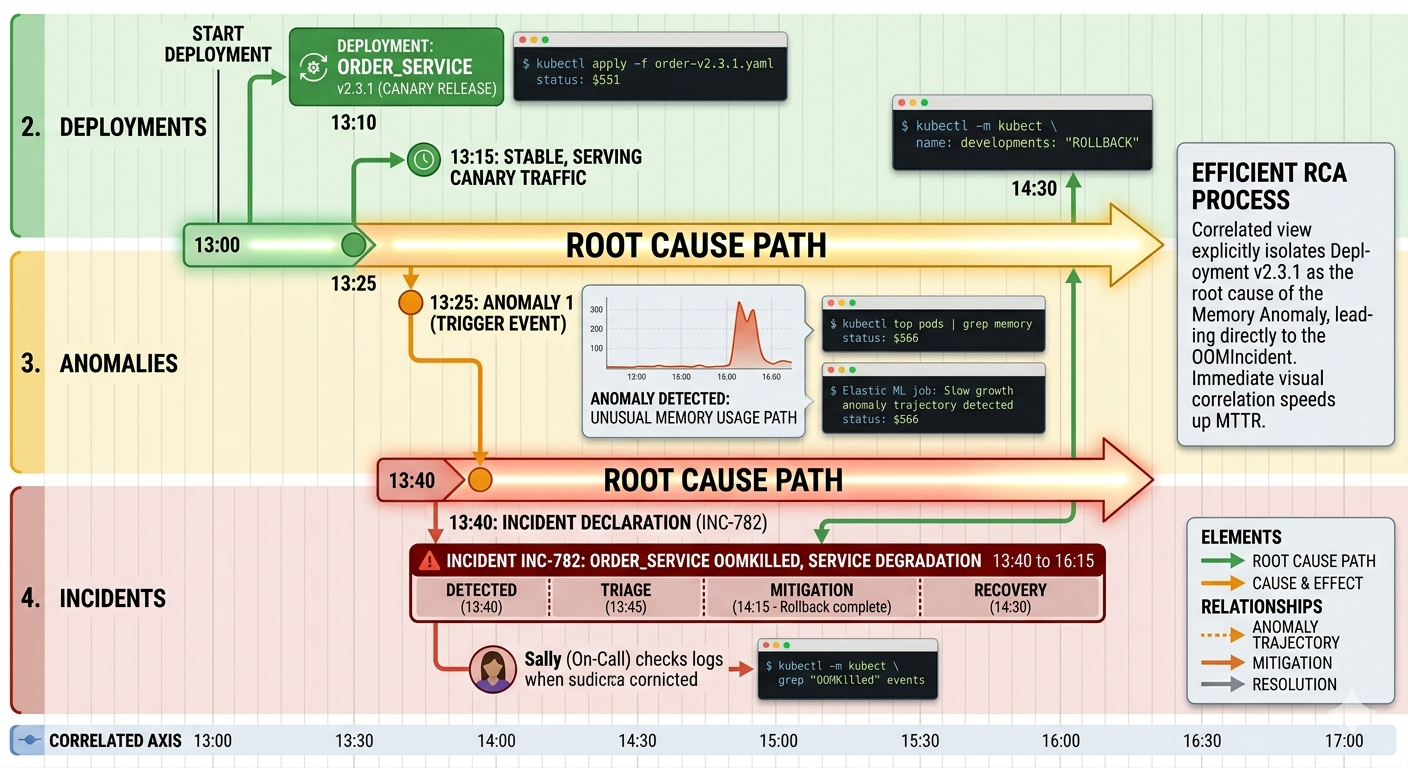
5. Surface Root Cause During the Incident
Don’t wait for postmortems. Show likely causes immediately.
Where OpsBrief Fits In
This is exactly what OpsBrief is built for. OpsBrief transforms fragmented signals into structured operational intelligence by:
- Capturing events across tools like Slack, GitHub, and monitoring systems
- Automatically correlating changes with incidents
- Classifying events by type and severity
- Providing a real-time, searchable timeline
So instead of spending 60 minutes finding the root cause, teams can identify it in minutes.
Conclusion
RCA isn’t broken because teams lack skill. It’s broken because they lack context. When data is fragmented, the root cause is hidden. When events are connected, the root cause is obvious.
The goal isn’t better postmortems. It’s faster understanding while the incident is still happening.


