
The Rise of Cross-Functional Operations Intelligence
Learn how OpsBrief helps teams improve cross-functional operational visibility by correlating incidents, deployments, alerts, and operational events into one searchable timeline

Janelle McCombs

Modern operational problems rarely stay isolated within a single team. A deployment issue can impact customer onboarding, marketing campaigns, support workflows, payment systems, and internal operations within minutes. But despite how interconnected modern systems have become, operational visibility inside many organizations is still fragmented. Engineering teams monitor infrastructure. Product teams track releases. Operations teams manage incidents. Business teams focus on customer impact Everyone sees part of the operational picture, but very few teams see the full timeline of events. That disconnect is driving the rise of cross-functional operations intelligence.
Why Operational Silos Create Delays
As organizations scale, teams often adopt specialized tools that solve specific operational problems. Infrastructure alerts may live in Datadog. Incident escalations happen in PagerDuty. Deployments are tracked in GitHub. Internal discussions take place across Slack or Microsoft Teams. While these tools are useful individually, they can create operational blind spots when information remains disconnected. During incidents, teams often spend valuable time trying to answer questions like:
- Did a deployment trigger this issue?
- Which systems changed recently?
- Is another team already investigating?
- Are customers actively affected?
- Is this part of a larger operational problem?
Without shared operational context, coordination slows down significantly.
Cross-Functional Visibility Is Becoming Essential
Operational intelligence is no longer just an engineering concern. Business operations, customer experience, product delivery, and revenue performance are now closely tied to infrastructure reliability and service availability. That’s why more organizations are investing in systems that provide visibility across both technical and operational workflows. Cross-functional operations intelligence helps teams:
- Correlate incidents and deployments.
- Understand operational impact faster.
- Reduce investigation delays.
- Improve communication between teams.
- Create shared operational awareness
Instead of reacting to isolated alerts, organizations can understand incidents within a broader operational timeline.

The Shift From Alerts to Context
Many monitoring systems are excellent at generating notifications. The bigger challenge is helping teams understand what those signals actually mean in context. An alert by itself rarely explains:
- What changed beforehand?
- Which teams are involved?
- Whether similar incidents are occurring
- How widespread the impact may be
This is where operational context becomes critical. Teams that can correlate infrastructure events, deployments, incidents, and operational activity in real time typically resolve issues faster because responders spend less time gathering information manually.
Operational Intelligence Beyond Engineering
Cross-functional operations intelligence also improves visibility for non-engineering stakeholders. Support teams can better understand customer-facing disruptions. Product teams gain awareness around release-related incidents. Operations leaders can identify recurring operational bottlenecks. Business teams gain clearer insight into operational risk and service reliability.
This creates stronger alignment across departments during high-pressure situations.
Building Shared Operational Awareness
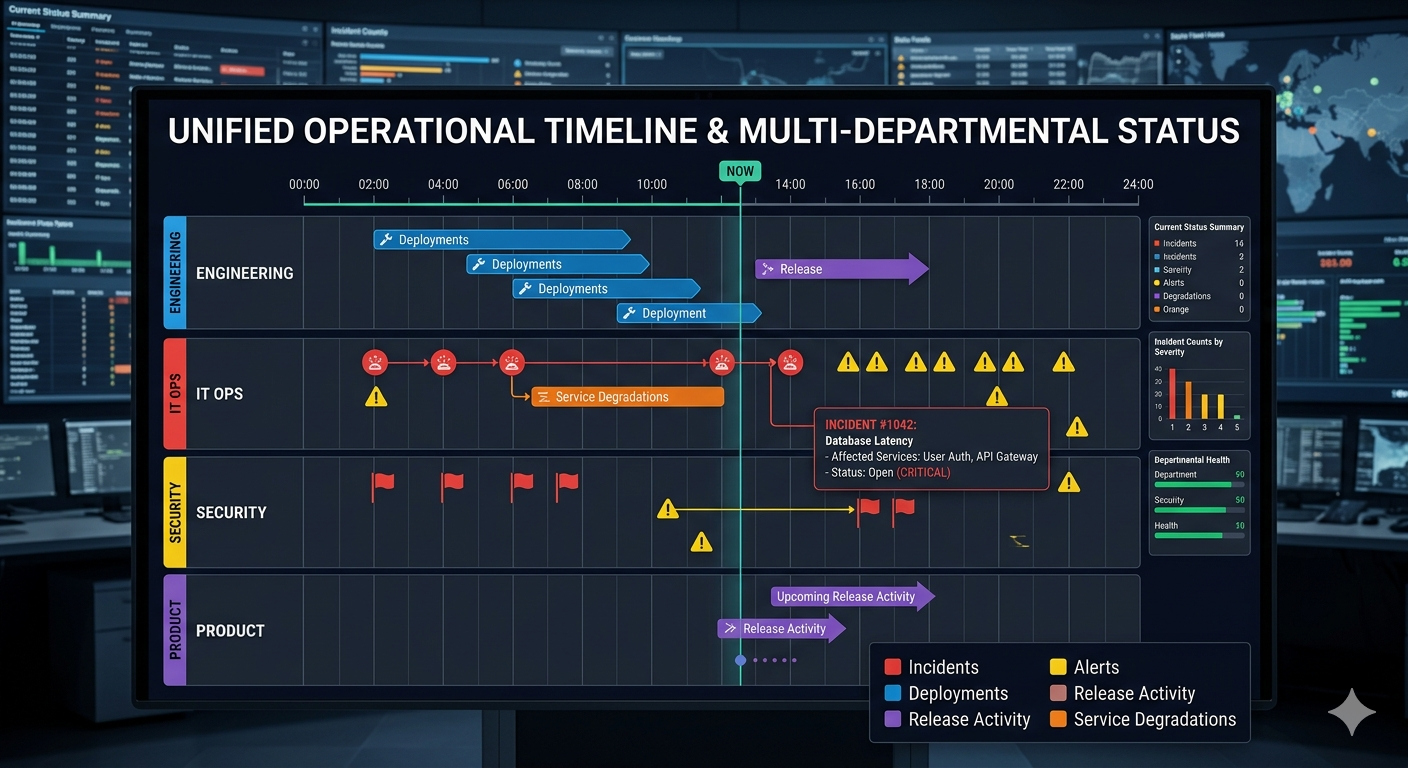 OpsBrief helps teams centralize operational activity from tools like Slack, GitHub, PagerDuty, Datadog, Discord, and Microsoft Teams into one searchable operational timeline.
Instead of piecing together fragmented information during incidents, teams can quickly understand how operational events connect across systems and departments.
This improves coordination, accelerates root cause awareness, and reduces operational friction during incident response.
OpsBrief helps teams centralize operational activity from tools like Slack, GitHub, PagerDuty, Datadog, Discord, and Microsoft Teams into one searchable operational timeline.
Instead of piecing together fragmented information during incidents, teams can quickly understand how operational events connect across systems and departments.
This improves coordination, accelerates root cause awareness, and reduces operational friction during incident response.
Conclusion
As organizations become more interconnected, operational visibility can no longer remain isolated inside individual teams or tools. Cross-functional operations intelligence is becoming essential for faster incident response, better coordination, and clearer operational awareness across the entire organization. Teams that can connect operational signals across engineering, product, operations, and business workflows are better equipped to respond to issues before small disruptions become larger operational problems.


