
Signal vs Noise: A Framework for Filtering Operational Data at Scale
Learn how OpsBrief helps teams separate meaningful operational signals from alert noise by bringing deployments, incidents, and system activity into one searchable timeline.

Jake Davids

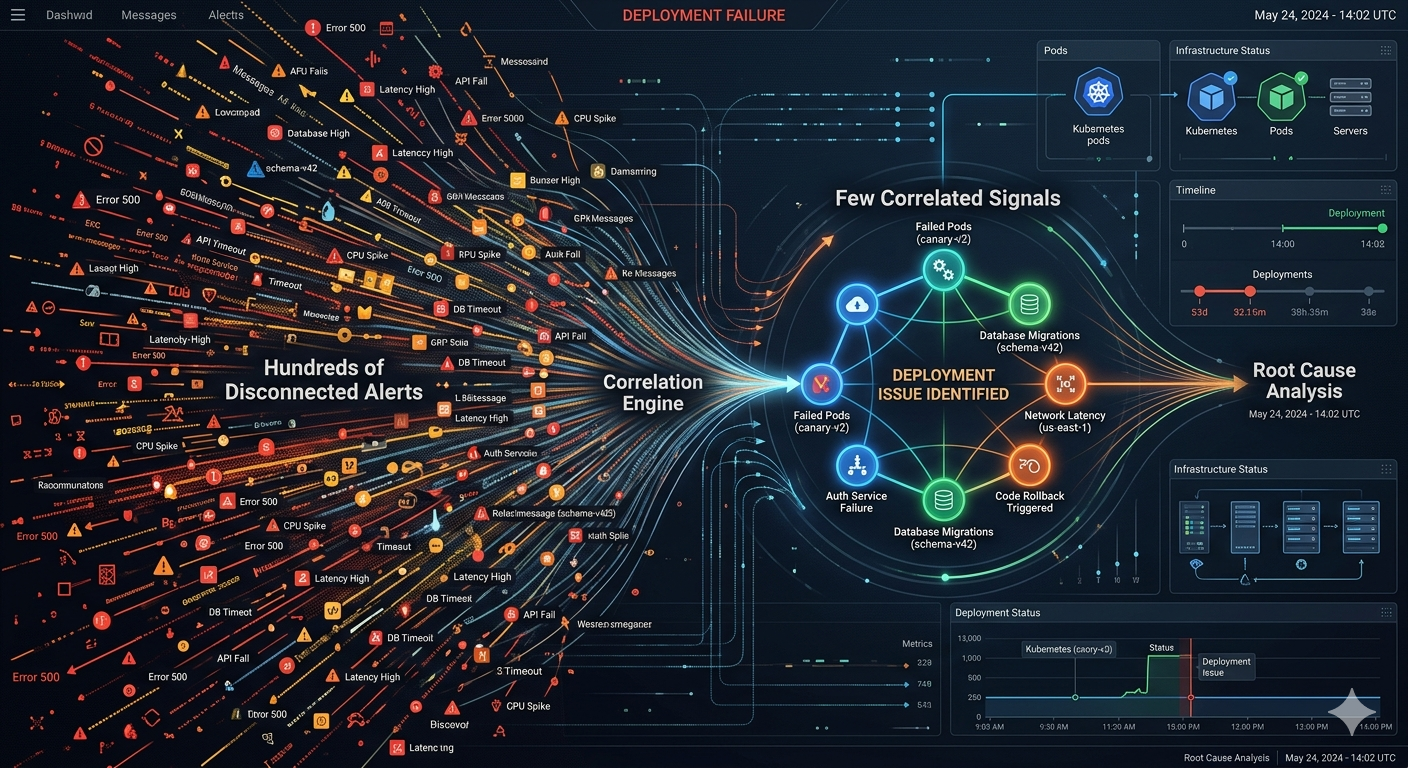
Most teams don’t struggle because they lack monitoring. They struggle because they are overwhelmed by it. A typical engineering organization already has dashboards, alerts, logs, incident tools, deployment notifications, Slack channels, and monitoring systems constantly generating information. In theory, this should improve visibility. In practice, it often creates the opposite. When everything appears urgent, it becomes harder to understand what actually deserves attention. That is the difference between signal and noise.
Why More Data Doesn’t Always Mean Better Visibility
As systems grow, operational activity increases alongside them. A single deployment can trigger:
- Infrastructure notifications
- Error logs
- Performance fluctuations
- CI/CD messages
- Monitoring alerts
- Team conversations across Slack or Teams
Most of this activity is expected. Some of it matters.
Over time, teams begin to tune out operational noise. Alerts become repetitive. Dashboards become cluttered. Notifications lose urgency.
Ironically, important incidents often become harder to notice even though more systems are being monitored.
What Counts as Signal vs. Noise?
In operational environments, noise is activity that generates attention without creating meaningful context. Examples may include:
- Duplicate alerts across systems
- Low-priority threshold notifications
- Temporary infrastructure fluctuations
- Routine system events with little operational impact Signals are different. A signal points toward meaningful change. That may include:
- A deployment followed by rising latency
- Error rates increasing across services
- Failed health checks tied to a release
- Customer-impacting degradation patterns
Signals rarely appear alone.
A deployment notification may seem harmless until it is viewed alongside performance degradation and unusual service behavior.
This is why context matters more than volume.
A Practical Framework for Filtering Operational Data
Teams that operate effectively at scale usually focus on a few consistent habits.
Treat Events as Context, Not Isolated Alerts
Operational changes become easier to understand when they are viewed as connected events rather than disconnected notifications. Examples include:
- Deployments
- Releases
- Infrastructure changes
- Service degradations
- Incidents Seeing these together creates operational context.
Prioritize Correlation Over Alert Volume
An isolated alert rarely explains much. But when signals connect, patterns emerge. For example:
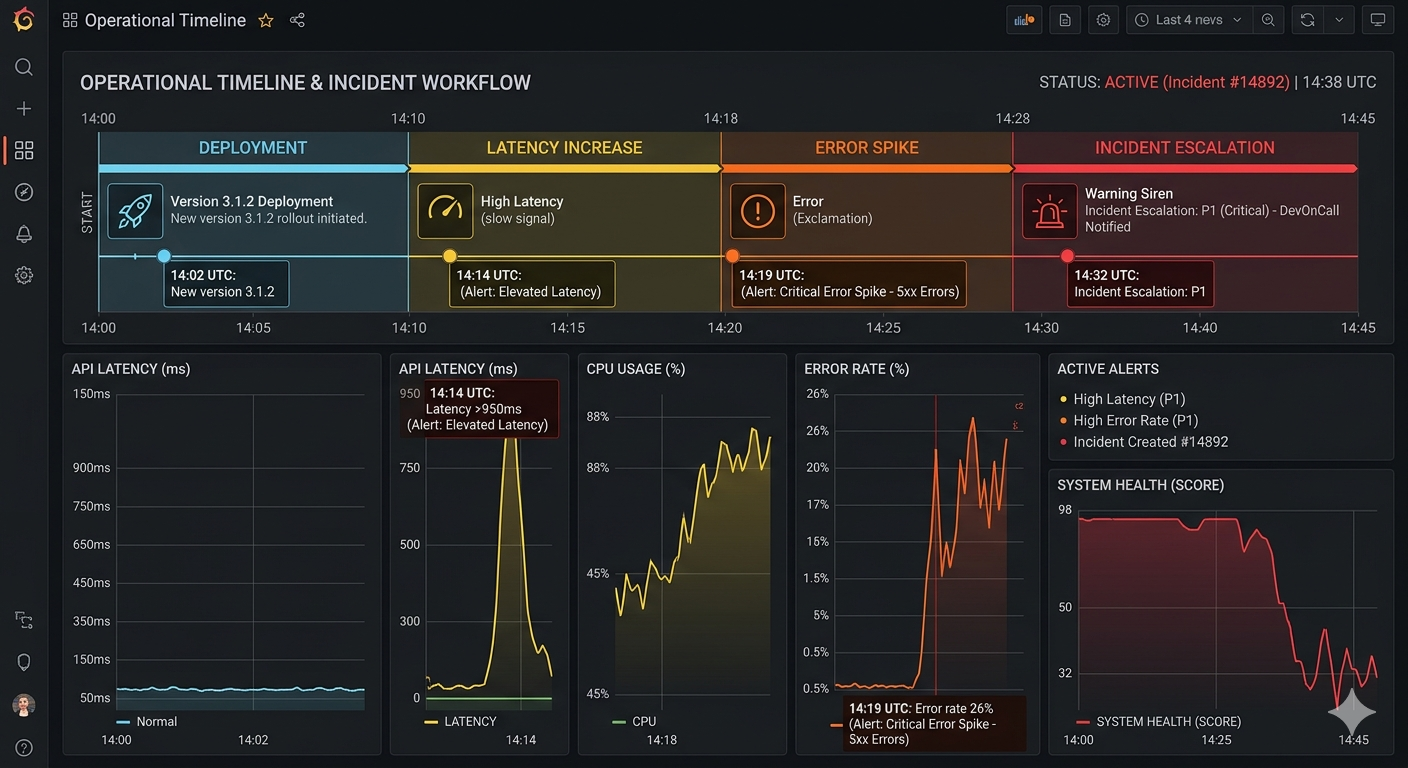
- Deployment → latency increase
- Infrastructure change → API failures
- Release → error spike → customer complaints Correlation helps teams understand not only what happened but why.
Reduce Repetitive, Low-Value Alerts
Many organizations receive multiple notifications for the same underlying issue. Reducing duplicate or low-priority alerts makes important signals easier to recognize.
Build Shared Visibility Across Teams
Incidents become harder to manage when engineering, operations, and product teams work from different information.
Shared visibility creates faster alignment and clearer communication.
How OpsBrief Helps Teams Focus on Signal
OpsBrief helps teams bring operational activity into one place so changes can be understood in context. Instead of relying on disconnected alerts, teams can:
- Correlate deployments, incidents, and anomalies
- View operational activity in a searchable timeline
- Classify events by type and severity
- Surface important signals in real time The goal is not fewer signals. It is better visibility into the signals that matter.
Conclusion
Modern systems will only become noisier.
More services, more deployments, and more monitoring tools inevitably create more operational activity.
The teams that navigate complexity effectively are not necessarily the teams collecting the most data.
They are the teams that understand how to filter it.
Because in operations, the biggest problem is rarely missing information.
It is missing what mattered.


